On planning, creativity, and strategy
April 20, 2012 1 Comment
This is one of the best presentations on what we (planners) do and why we do it.
Related articles
- Strategy is not a seasoning. (hottubcrimemachine.com)
Solving mysteries at 104 degrees Fahrenheit (40 degrees Celsius).
April 20, 2012 1 Comment
April 19, 2012 1 Comment
It isn’t bottled in a glass jar with a plastic top. You can’t just add a dash here or there when the work is bland or when the client doesn’t like how it tastes, just like you can’t throw in a bit of design.
Strategy, like creative/design, is one ingredient in successful advertising. You need to plan on including it from the start. You need to measure it out and make sure you have enough to complete the assignment. It may play a bigger role at some points and take a back seat in others but what you need to accept is that it is there throughout. If done well, strategy blends with the other “flavors” but becomes inseparable from them when you look at the finished project.
If the work or the client relationship is in trouble, “sprinkling” some strategy on it to cover up a bad product is probably going to be as effective as painting your house because the foundation is crumbling.
April 12, 2012 Leave a comment
The only question I get asked more than “How can I become a planner?” is “What the hell do you actually do?”
I usually say something along the lines of “I help brands solve achieve their goals by creating solutions that are rooted in a deep understanding of their customers.”
Here’s another definition, from the blog How we move:
My job is to first find out as much as I can about the brand and its consumer to understand what will make people fall for the brand offer.
What else have you heard/said/written? Anyone else out there have a good explanation of what we do?
March 26, 2012 7 Comments
Continuing my theme of re-posting interesting posts/articles from other planners on they got into the field, here is the latest from Andrew Hovell on his advice to aspiring planners. I found it courtesy of my friend Sam Joseph who posted it on his blog .
Someone emailed me, as they’ve just finished Miami Ad School and wanted my help in starting out to get work in New York, by sharing the things I wish I’d known when starting out.
As usual, I’m bemused anyone cares what I think,especially someone looking to work in New York.
Also, I thought I’d share what I wrote just in case anyone else finds it remotely useful. Here’s what I wrote:
Congratulations on (nearly) graduating. Happy to help, but two caveats:
- I’ll post my thoughts on the blog so the other 4 readers can benefit/disagree/dismiss
- My experience is VERY different to New York, there are, of course, things that are true of most organisations, but still, while I’ve worked on global stuff that includes the US and worked directly with US agencies, I can’t pretend to have huge experience of the culture and practices of those places
I think what you mean by the question is what I wished I knew when I started out that would have helped me then, the stuff no one tends to tell you when you’re new. So I’ll answer that stuff first.
But you might mean, things I know now that I wish I knew back then, so I’ll answer that too.
Do bear in mind that I started out as an account handler (don’t you hate that term ‘handle the client’)not a planner. I haven’t any experience as a junior planner because I’ve never been one. However, I’ve naturally worked with one or two and will try to share what they’ve told me or what I’ve gleaned from being around them and what their experience seems to have been like.
Finally, don’t mistake me for some guru. I really am not. Make sure you get as many insights from as many people as you can, especially those working in New York.
So, anyway, that’s plenty of prevaricating, even for a planning type, here are some thoughts.
- When I started out, for personal reasons I won’t bore you with, I couldn’t attend a string of interviews with London agencies for their graduate schemes. This was a setback, but I wasn’t prepared to accept hanging around for a year for the next round. So I moved to London and worked for a newspaper in ‘media sales’ – the most hateful job I’ve ever done, and I’ve worked in a nursing home, on a health insurance screening helpline and even sold plumbing and drainage insurance. My reasoning was that any experience is better than none, that I’d build up contacts in agencies and maybe get in the ‘back door’and being in London was a whole lot more convenient for interviews and stuff. You see I had a fixed idea of the kind of place I wanted to work at and the kind of role I wanted – a suit at a big London agency. The trouble was, I soon found that I didn’t just dislike that job, I wasn’t too keen on London. Too big, too impersonal and definitely too expensive. So my focus shifted to getting a job with an agency OUTSIDE London. That’s my first point really, be sure you really want to work at the places you’re looking at. The job is bloody hard work, you need quality of life too. Be sure that New York or wherever you’re looking at is right for you, you need to work to live, not the other way around. I’ve known one or two people who have moved to New York for their dream job, one with enough money to enjoy New York to the fullest. But they’ve been disappointed to find you can live the fast life and enjoy all that teeming, thriving culture and sheer, but it’s tough and exhausting and not what they really wanted – they we’re really in love the idea, not the reality.
- BUT you need to weigh all this stuff up carefully. In the US I think you tend to be fortunate that good agencies doing good stuff are all over the place, in major cities and less hectic locations like Portland or Boulder as well. In the UK, the concentration of agencies doing really great work on really great brands is concentrated in London. One really does choose between the very best job satisfaction and quality of life. I will always regret that I’ve only been able to do work we all really want to do once or twice. I don’t think I’m the best planner in the world by any stretch of the imagination, but I’m not the worst. I’ll never really find out what I was capable of because I’ve never worked at those kind of places enough. You don’t want to finish your career thinking ‘what if’. So work at a ‘big name’ or ‘good name’ agency as soon as possible, wherever that might be. I’ve found it difficult sometimes in job interviews and stuff when talking about my experiences because many are looking for certain types of agencies and certain kinds of projects. If people get over their prejudice, I do fine, but certain names open doors for you, so it’s worth getting that on your resume as soon as possible, it will benefit you massively in the long term.
- But in the end, when it comes to the first job, the objective is largely GET A JOB. Different agencies have VERY different cultures. Sometimes, very often to be precise, it’s not a perfect fit. It’s not a reflection on you, or them, it’s just the way it is. My first job wasn’t really right for me, my second was for a bit before the agency completely changed. I learned masses along the way, though, including the fact I was not very good at doing, but maybe OK at thinking and became a planner. My second job was at a coveted agency, hard to get into, which I did on the basis of what I’d achieved at the first place. What I’m saying is, the best chance of getting a dream job is having worked at any other place in any role, because it makes the kind of role you want so much more accessible. And you don’t yet know you’re really cut out to be a planner. You might find you’re better as a suit or even a creative.So do anything and triangulate.
- I also wish someone had told me in those early days how important internships were. Now I didn’t know I wanted to be in advertising until after I graduated, I wish I’d know sooner because I would have spend my summers doing work experience there and of I didn’t get a job when I graduated, I would have pestered them to do internships. This really is your golden ticket into good agencies. I’ve had loads of students and graduates do internships with me and I’m so pleased they’re now at places like DDB, JWT, Publicis and others. All the books and courses (even Miami) are no substitute for learning on the job, agencies know this and hire people in addition to the graduate stuff if they perform well. Just like they’ll hire account execs and junior planners who have worked somewhere for a year, even if they hated their job.
- When you start your job though, I wish someone had told me the value of getting to know traffic. They’re the lifeblood of any agency, it’s their job to know what’s going on. Agencies have unwritten rules and cultures, the quickest way to get to know them is to get to know traffic. Now it depends where you work, but mostly, traffic keeps creatives behind a force field, the people you need to make friends with to prosper. Make friends with traffic and you get more access to the creatives.
- Many junior planners (and account execs) are surprised how dull the job is when they start. Suits have do masses of contact reports, spreadsheets and other crap. Junior planners are doing masses of TGI analysis, competitor reviews, late night preparing workshops and being sent out to do street interviews. Be patient. This is called earning your spurs. Those senior people you see meeting clients, spending a whole day just writing a brief and doing the stuff you really want to be doing went through all this too. If you’re a planner, it takes between 5 and 7 years to find your voice and be really confident with this stuff. You can’t escape getting the experience.Embrace it.
- But don’t be too patient. If you hear of a pitch, a great project coming up, try and get in on it and help as much as you can. Try and have an opinion on things. Contribute.The beauty of pitches is that are a big scramble, you’re up against it and everyone has to pitch in. The rules of who does what tend to stretch and you find yourself contributing more than you would in a ‘normal project’. Not enough junior people in my opinion fight for projects and work. I wish I’d known how much senior people respond to initiative and sheer enthusiasm. I spent too much time waiting for projects to come my way before I got impatient once and got hold of the client brief (as an account exec) and wrote my own creative brief without being asked. There was plenty wrong with it, but I showed I had some sort of aptitude and more stuff came my way.
- In any case, you might find you have enough on your plate anyway. I learned the fastest I’ve ever learned working on a supermarket account, because it all moved so fast everyone had to pitch in. In 4 weeks, just myself and another account manager effectively did 5 store openings (local campaigns more labour intensive than national ones), and a national telly campaign, while the account director was on paternity leave and the department head couldn’t be arsed to help. It nearly broke me, it was the only time in my career I found I couldn’t sleep with worry, but we got through it and it’s true what they say, what doesn’t kill you makes you stronger. After that, anything appears easy. You’ll have times like this, when you can’t see an end to it and you can’t see a way through it. It does end and it’s worth it. It wins you respect and teaches you so much. Welcome the chance.Endure.
- I wish someone has told me how unimpressed people are with how cool you are. I thought succeeding in agencies was all about being a ‘character’, wearing the right clothes and, well, being cool. It’s not. It wasn’t for me, because I’m the most uncool person you could ever meet, I just looked stupid. It’s not for most people either, because people are really impressed with hard work and enthusiasm. This is even more true of planners. No one cares how clever you are, no one gives a monkeys about the latest theories or trends. No one really needs planners, creatives and suits got on find without them for decades. You need to be add value and be useful. For suits that means you’re going to make their lives easier – get great work out of the creatives, help get the client to buy it, make the client feel the relationship is really valuable. Creatives want to know you’ll help them do their best work and get it through the client and research-they judge their year on how many golds they’ve won. Clients don’t buy risks, they buy sure things, they want to know the agency output will help them sell stuff and if not, they can prove to the board they did all they could to make it that way. That’s it. That’s not cool, usually that’s hard work, mostly working harder than everyone else. I wish I’d known this at the start and not looked like such a tit.
- Finally, I wish someone had told me to enjoy it. As I mentioned before, you’re impatient as a junior, you want to progress, you’re not on much money and sometimes it feels like hard, dull work with little reward. The money does sort of come in, but it takes time. But when it does, it quickly gets swallowed up as you find more stuff to spend it on, not to mention settling down and the money pit also called kids. You have more responsibilities to more people, while agency short-terminism and clients’ too mean you always worry about job security even more. Sure, losing your job is bad for anyone, but when you have kids depending on you, it’s more important than when you’re renting and pretty footloose. At the same time, there’s a reason senior people get paid more – they have to worry a lot more about the actual job. It might seem you have the world on your shoulders when you’re in situations like my supermarket one, but that’s nothing next to what account directors or senior planners have to stress about. They might do more of the interesting stuff, but there’s pressure that comes with that. So enjoy where you are now, live in the moment. The brilliance of agencies is agency people and the fun you can have with them. As a junior, that means extra curricular fun too. Yes, you have to work hard, yes, the hours can be bloody long, but make sure you enjoy your youth and all that entails. You won’t experience life in Technicolor in the same way ever again, you won’t have the same freedom, you won’t have the same energy. Don’t let your work define you, let you define you. Going out on school nights, being able to work with a hangover, drinks after work, the time to read what you want, see films, know all the good music and have time to listen to it. These are golden times, don’t waste them. This habit of making time to live life is something you should never lose either, it will make you a better planner, as in the end, it’s about people and what people are interested in, the more you’re plugged into this, as well as ‘category dynamics’ the better.
- Oh, and one more thing, don’t worry if you’re shy and nervous talking to a lot of people in one go. So am I. Some people are just naturally flamboyant and can hold a room. That’s not most people. The confidence comes from experience, the more you know, the more you have practised, the easier it becomes. Also, I think people really don’t care if you’re a bit nervous or don’t appear slick, they respond to your enthusiasm and the fact you look like you’ve worked really hard. Don’t try and be flamboyant and off the cuff if you are not, just do the work and you’ll probably come off better anyway.
So that’s what I would have liked to have known about starting out. This is what I would have liked to have known about the long term:
- Work abroad as soon as possible. Planning skills are transferable to any market, any agency. If you’ve worked in a developed market, you have a brief window where people in Asia will think you bring something valuable to the table (even if that’s the case, learn their culture as soon as possible, western rules just do not apply), don’t waste it. See the world, being a planner is an amazing passport to do that and when (if) you get back your broadened horizons will make you a better planner and person. I bitterly regret not doing this and always will. There’s an added benefit to this, it seems that consolidation is making more and more work global, having lived a more ‘global’ life will set you right for the future. I recently didn’t go to Australia and longer ago didn’t work for Rob Campbell because of starting a family. Nothing matters more than them, nothing in this universe makes me happier, but I do regret not having done all could have done before they came.
- I wish I’d understood digital stuff a lot earlier. Plenty of planners claim to, but they don’t really. We’re all playing catch-up to an extent, you can’t do any form of digital planning without a rudimentary comprehension of the technology, you can’t do any form of planning these days without ‘getting’ digital and how it’s influencing culture. There’s a massive opportunity in any market for those who can apply old school skills to the new disciplines, and few able to pick up the mantle.
- On that, I wish I had known the consolidation that has happened with clients and agencies. Where I work, opportunities to do integrated, let alone ’advertising’ projects are few and far between, which can be frustrating since the ‘digital bit’ is often beholden to the strategy worked out by the advertising focused, lead agency based in London, or would you believe, the media agency. I don’t care what the medium is, I just want to do stuff that will change businesses, which can tough when your hands are tied by planning done by others that often haven’t really considered your bit. I enjoy the challenge of chipping away at the thought leadership of the London boys, and really enjoy pulling the rug out from under their feet when they’ve underestimated me because I don’t work in London, but as I mentioned before, I wonder what I might have done different if I’d known integrated work would dry up. I think that’s a salient point to anyone working in the west. When the exciting economies are in the developing world and there’s less and less opportunity in a shrinking industry in the UK and US (Australia?) perhaps one should think about working there?
- I sometimes wish I’d shifted to the client side earlier on. My wife thinks I would have been bored and frustrated, perhaps she’s right, I always feel like I have to keep moving forward or die, like shark or something, repetition fills me with dread, but I sometimes I crave the longer term security and career path you get in a big, brand owning association. I would have liked to have given it a try to see what it was like.
- But to be honest, I wish people in this industry would stop moaning. We’re incredibly privileged. It’s not big money like bankers or lawyers, but it’s so much more interesting (I think). We still get very good pay next to most people, we wear what we like, work with interesting people most of the time, we’re never bored for long and it’s in flux. Which means the future is not written. Never has there been a better time to create your own future. No one knows what the agency of the future will be like or the planner of the future. It’s not like the old days, but then the old days were not as great as people make out. They never are. Here’s to the new days and the people ready to create it rather than talking about it. Planners in my view.
If you’re interested in reading more about how to become a planner, check out these other posts:

February 8, 2012 Leave a comment
If you love what you read here and on Twitter, and want to see me speak live, I’ll be presenting at the Big (D)esign conference in Addison, Texas with my colleague Tim Parcell. We hope to see you there!
Session: Defining the New Partnership
Speaker: Ezra Englebardt
Speaker: Timothy ParcellTrack: Strategy
Day: Friday, June 1st, 2012
Time: 3:00pm
Length: 1 hour
For years, Art and Copy ruled the roost in the worlds of advertising and design. But as brand interactions shift from passive to active experiences, the way we connect to customers requires a new partnership. Sapientnitro believes that Brand Strategists and Experience Designers play an integral role in delivering the work that breaks through the noise.
This new partnership is critical during the initial stages of client engagement (discovery, defining) through completion (designing, developing, deploying). Whether we’re redesigning lenscrafters.com or building interactive menu boards for Dunkin’ Donuts, a strong partnership between strategy and experience design is at the foundation of all our work.
What You Will Learn:
- How these two disciplines can partner together to deliver a better end result
- How to get involved in the process/concepting sooner
- How to stay involved longer and actually build things
- How to position yourself, and this new partnership, within your company/agency
January 18, 2012 9 Comments
At one point or another in their career, every account planner/strategist will write a blog post about how get into planning. I’ve “written” two and I put written in quotes because they’re really just re-blogs of other people’s posts on the subject. If you want my opinion on how to break into the field, see my earlier post “How to become a Planner.”
The latest in this series comes from my good friend Mitch Polatin who was a great help in my getting into planning. He was the first planner I worked with when I started out and he was more than eager to let me follow him around and do all sorts of planner-y things. Come to think of it, he may have just tricked me into doing his work for him in a very Huck Finn-ish way. But seriously, I owe Mitch quite a bit for helping me become the planner that I am today. So without further adieu, here’s Mitch’s take on how to become a planner, with come help from Rob Campbell:
The Similarities Between Planning and Fight Club…
You wake up at Seatac, SFO, LAX. You wake up at O’Hare, Dallas-Fort Worth, BWI. Pacific, mountain, central. Lose an hour, gain an hour. This is your life, and it’s ending one minute at a time. If you wake up at a different time, in a different place, could you wake up as a different person?
I’m constantly getting questions about how to break into Strategic Planning, and honestly answering this is more difficult than responding to my 3-year-old son when he asks ‘Where does hair come from?’ The point being, there is no clear rhyme or reason, which is a beautiful thing. But we can sometimes get caught up in this mystery. A recent blog post by Rob Campbell, Asia regional head of planning for Wieden + Kennedy, caught my attention. Rob writes: ‘planners – love to make a big deal out of being curious…Let’s be honest, curiosity is a basic human trait and even if planners execute this more than the majority [which I’d say is open to debate] they’re no where near as curious as people in the finance, technology, R&D or criminal investigation industries, to name a few.” Rob is spot on. All too often we set up Planning as some form of creative Black Magic. Something that can’t be described or discussed –The first rule of Planning is: You do not talk about Planning. The second rule of Planning is: You do not talk about Planning. We Planners have no magic powers (other than being loquacious and absurdly profound at times). In fact, quite the opposite, we are ‘liberators’ as Rob succinctly writes. It is our role to help liberate our client business. Now, rather than being seen as the mysterious agency people who lurk in the background, Planners are the ones who release the hounds! There is something tangible here. But alas, how does this help us in regards to breaking into Planning. Well, we don’t need to frame it up as a special club only for the curious few — but we can introduce it as a club for those who truly want ‘to understand and represent our client audience.’
So, my advice?…Go to your cave and find your power animal.
For more from Mitch you can follow his blog Elevator “Door Close” Button’s Do Not Work.
November 23, 2011 2 Comments
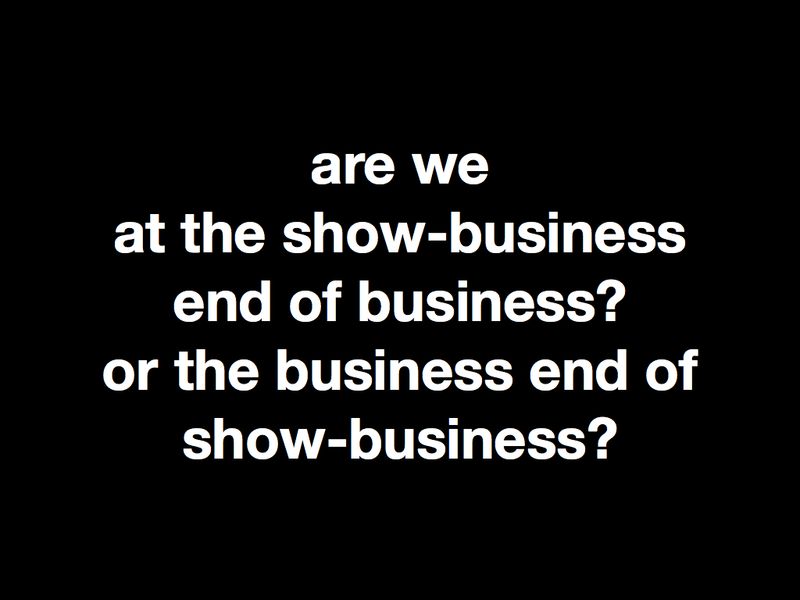
Martin Weigel over at Canalside View has been playing around with some interesting new blog formats lately. My favorite has been a series of bold statements presented in black and white. He posted about 20 or so of these, and here are my favorites:


September 8, 2011 8 Comments
A few months back I wrote a post about how I became a planner. I included a post from Andrew Hovell with his thoughts on becoming a planner. And here’s part two. In which my new manager describes the questions that he asks when he interviews planners. It’s a few years old, but still very relevant.
I'm me?

 Hot Tub Crime Machine